
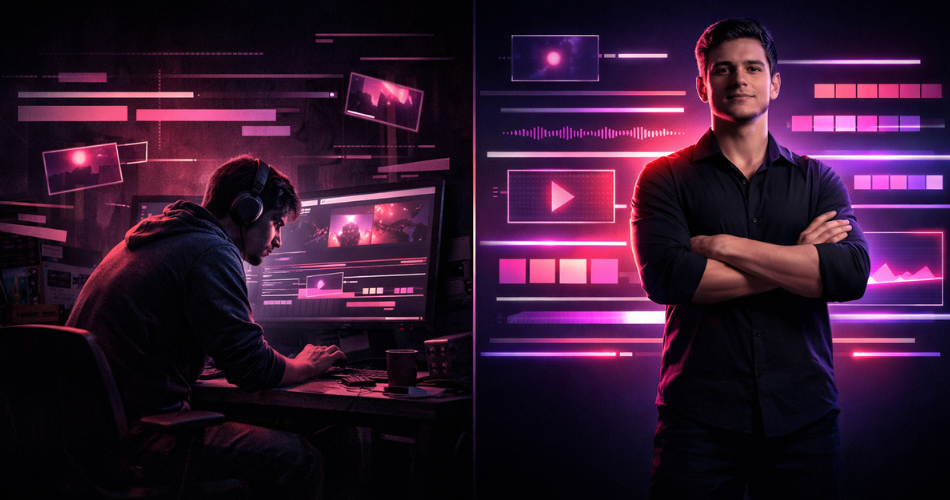
The difference between a video editor and a video partner is not about skill or software. It is about responsibility.
Both roles work with footage and deliver finished videos. On the surface, they can look the same. But once a project is underway, the gap between execution and ownership becomes clear, especially for businesses that rely on video to represent their brand.
What Most People Mean When They Hire a Video Editor
A traditional video editor is typically hired to execute instructions. The role is clear and task-focused. The editor assembles footage, applies polish, and waits for feedback before moving forward.
This model works well when everything is already decided. The message is clear, the structure is defined, and the client is comfortable controlling each step.
In practice, this often looks like:
- Direction coming after the first cut instead of before
- Feedback shaping the video retroactively
- Editors hesitating to make judgment calls
- Projects moving forward in small, cautious steps
When clarity is missing, execution alone cannot carry the project.
Where Video Projects Start to Slow Down
Most video projects do not fail outright. They stall.
This happens when no one is clearly responsible for shaping the video as a whole. Decisions about emphasis, pacing, or tone remain unresolved, and the edit becomes tentative. The editor waits. The client reacts. Each revision introduces new ideas instead of refining existing ones.
Over time, the project becomes heavier, not because it is complex, but because it lacks direction.
What Changes With a Video Partner
A video partner operates with broader responsibility. Instead of waiting for instruction at every step, a partner works with an understanding of the message, the brand, and the context where the video will live.
That responsibility shows up in how decisions are handled:
- Key cuts are made intentionally, not defensively
- Structure is shaped during the edit, not after
- Potential issues are addressed early
- The video moves forward with confidence
The goal is not to override input, but to protect the intent of the video by making informed decisions when they matter most.
Execution Versus Judgment
Technical execution is important. Clean cuts, strong pacing, and visual polish all contribute to a professional result.
But judgment is what determines:
- What belongs in the final cut
- What can be removed without weakening the message
- Where emphasis should live
- How the video should feel to the viewer
Without judgment, even well-edited videos can feel unfocused. A video partner brings judgment into the edit itself, rather than relying on trial and error through revisions.
Why This Matters for Businesses
For businesses, video is rarely just content. It reflects credibility, positioning, and trust.
When video requires constant oversight, it creates hesitation. Publishing slows down. Confidence drops. Teams spend more time managing the edit than benefiting from the result.
A partner model reduces that friction by providing:
- Clear ownership over decisions
- Consistent quality over time
- Less back and forth during revisions
- Video that reliably represents the brand
Video becomes something the business can depend on, not something that needs constant correction.
Knowing Which Role You Actually Need
Not every project requires a video partner. Some work is purely executional, and that is appropriate in many situations.
But when video is ongoing, brand-sensitive, or strategically important, the difference becomes meaningful. In those cases, the value comes not from how quickly footage is cut, but from how well the final video communicates what matters.
Final Thoughts
A video editor executes instructions. A video partner owns outcomes.
That difference shows up in momentum, confidence, and consistency. For businesses that rely on video to reflect who they are, the distinction is often the difference between frustration and trust.